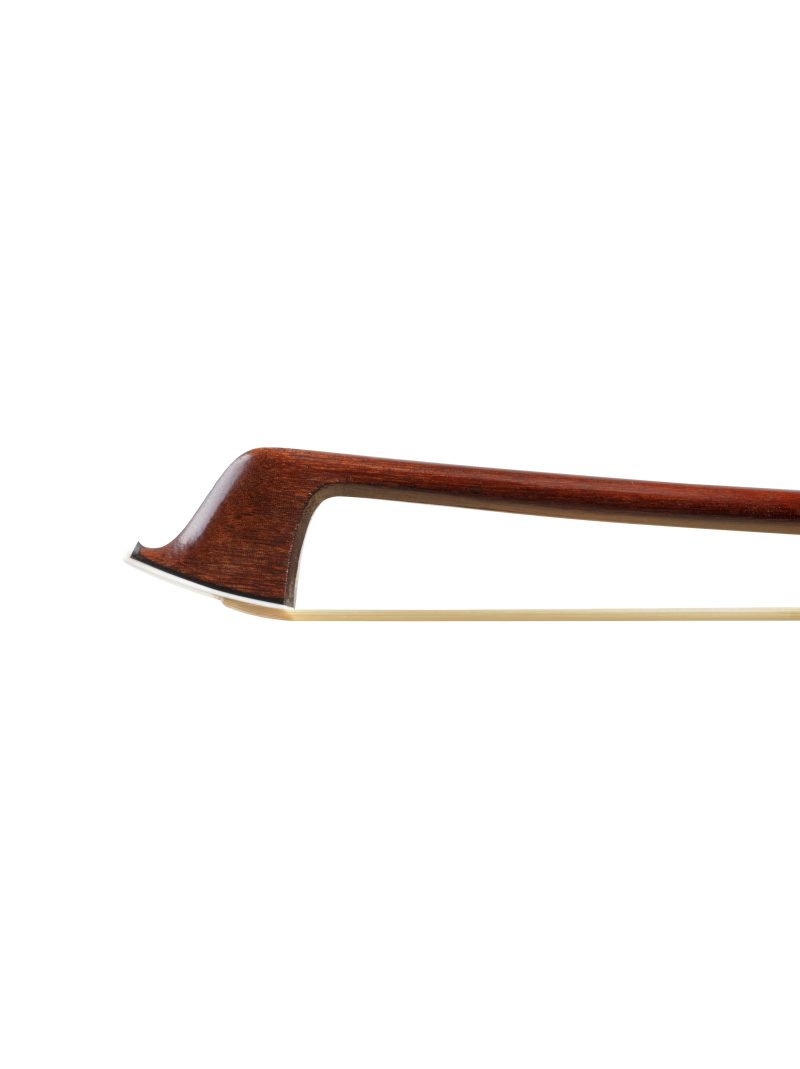
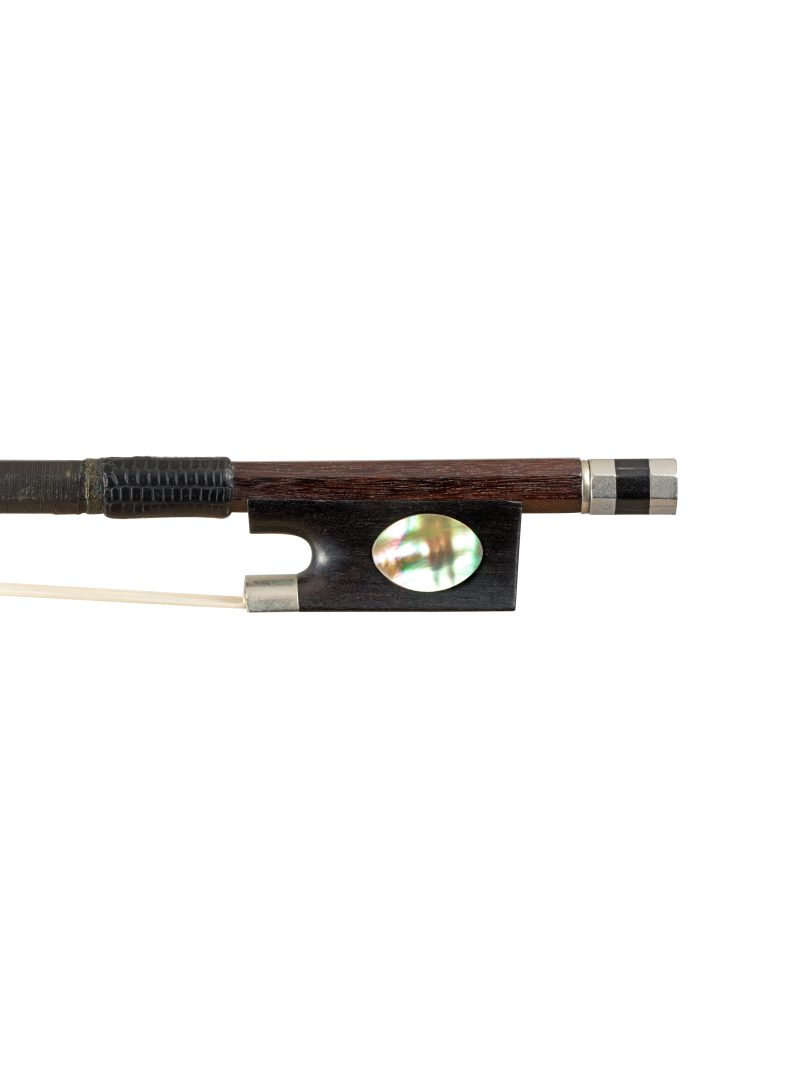
A nickel-mounted violin bow by Étienne Pajeot
Paris, circa 1820
Étienne Pajeot, the son of Louis Simon Pajeot, was trained from an early age in the family workshop. His name begins to appear on bows around 1815, and these early examples closely follow his father’s manner, featuring pointed heads and low, elongated frogs. Later the heads grow slimmer yet broad...
read moreA nickel-mounted violin bow by Étienne Pajeot
Paris, circa 1820
Étienne Pajeot, the son of Louis Simon Pajeot, was trained from an early age in the family workshop. His name begins to appear on bows around 1815, and these early examples closely follow his father’s manner, featuring pointed heads and low, elongated frogs. Later the heads grow slimmer yet broader in profile, the frogs rise higher and are frequently made of ivory, and the buttons are sometimes unusually short, accented with octagonal rings. Beyond his refined workmanship, Pajeot distinguished himself as a bold innovator, introducing numerous construction methods designed to strengthen and safeguard vulnerable parts of the bow. His experiments with metal slides and his development of two distinct self-rehairing frog designs – both unlike those devised by J. B. Vuillaume – proved especially influential in shaping French bow making during this era.
This example can be considered a turning point in Pajeot’s career: The gradual departure from his father’s style towards finding his own stylistic voice as a maker can be observed. It has a strong stick which makes an excellent companion to a player looking for a bow that combines the handling of early modern bows with the playability of its fully established later counterparts.