Forgers, Fakers, or Makers?
John Dilworth explores the work of the Voller Brothers by examining a violin in our upcoming October auction.
The Voller brothers, however we may judge them as forgers, fakers or merely copyists, were certainly gifted violin makers. It might be said that the quality of the work they created was without precedent in their period. Today we are accustomed to the blow-by-blow copies of fine instruments that are fairly common practice amongst modern luthiers. But the technical expertise and observational skill, as well as the excellence of the woodwork, lifts these instruments out of the ordinary, especially after they have earned the genuine patination and wear of nearly a century.
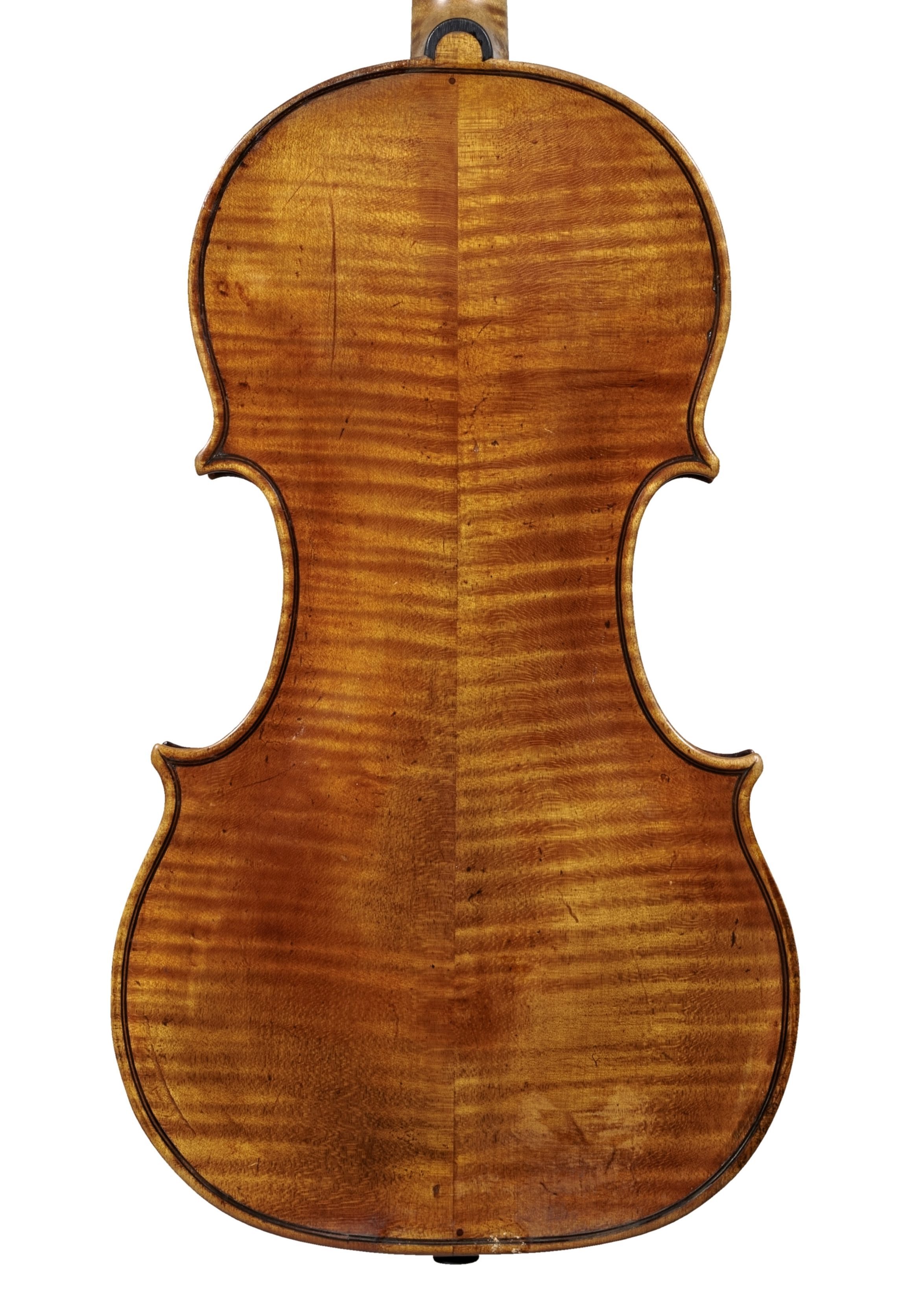
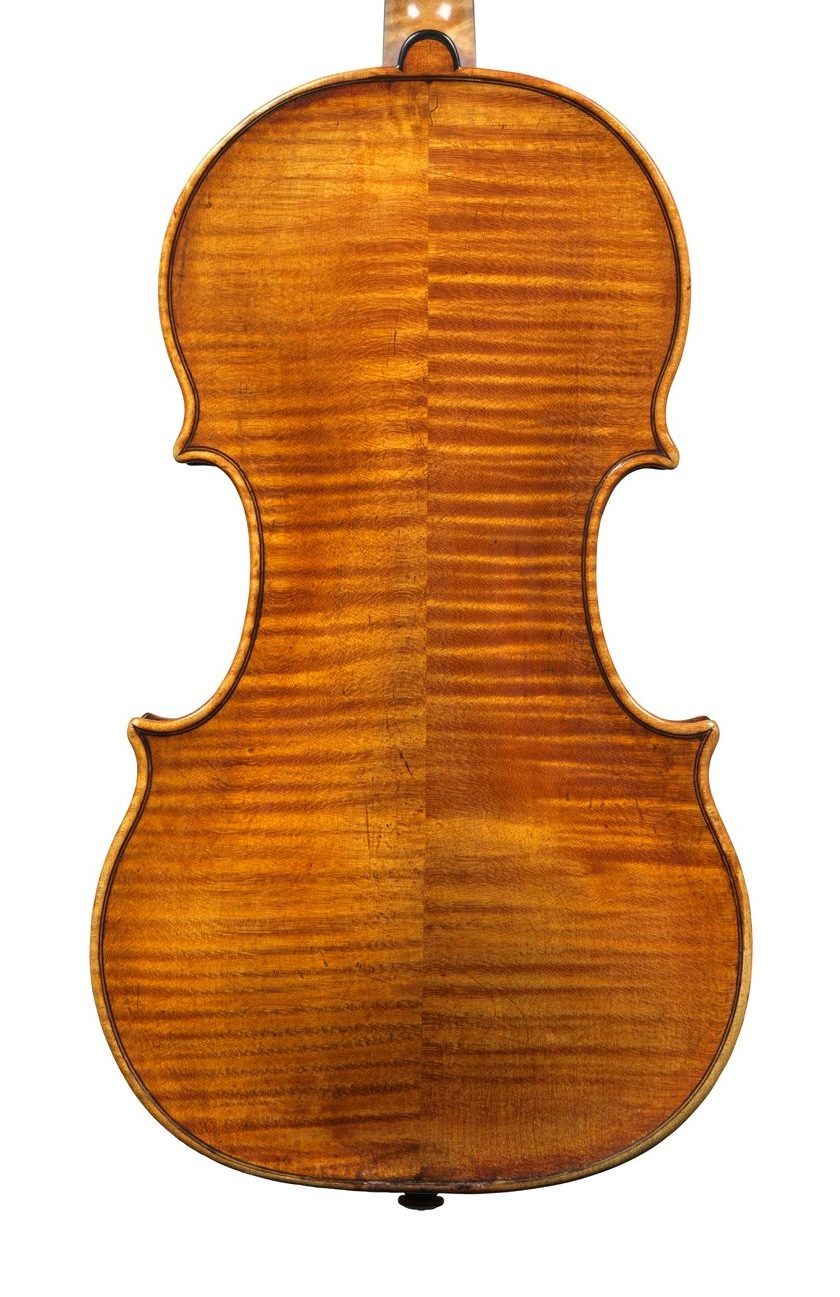
This violin is a stunning recreation of a Nicolò Amati. Visually, it supplies almost all of the satisfaction that the original might provide, except of course for the knowledge that it was worked by the hands of the great Nicolò in his hallowed Cremona workshop at least three and a half centuries ago. The arching is beautifully observed and recreated, as are the elegant corners, but most impressive is the varnish, which captures the subtle pale golden glow of the real thing almost to perfection. As an object in itself it is beautiful, and admirable.
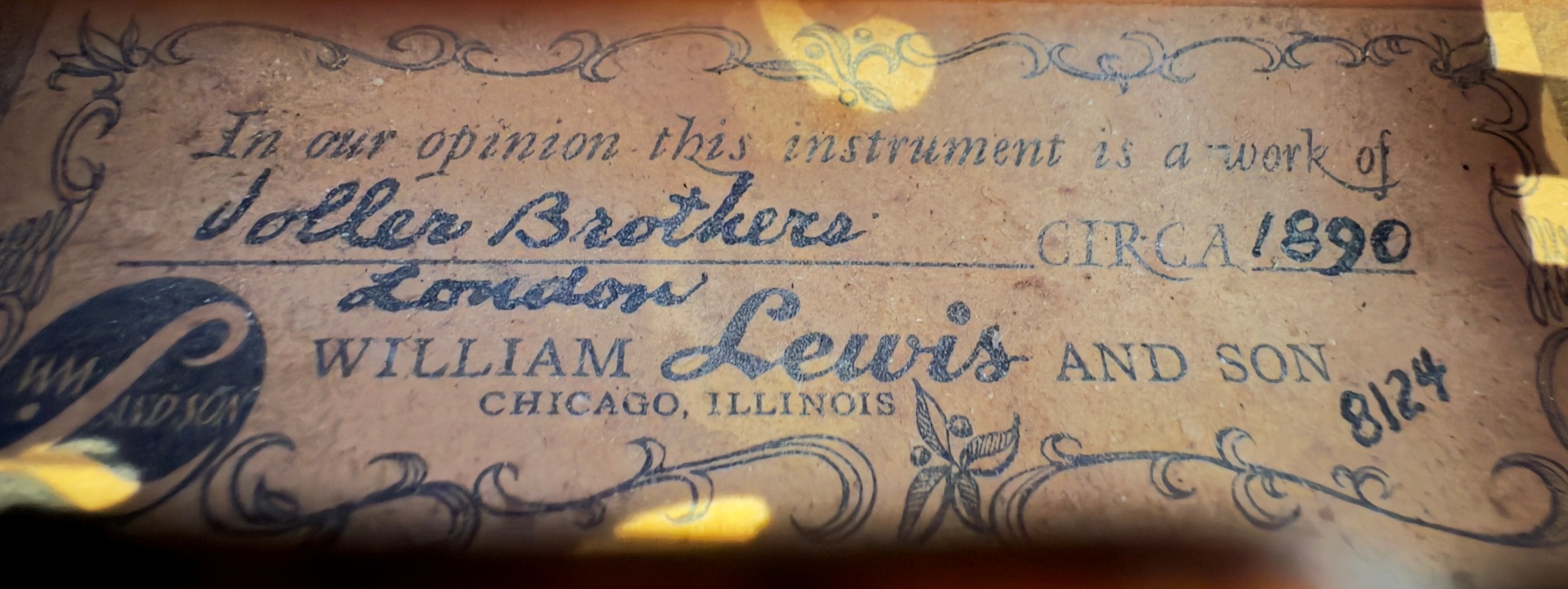
It bears an honest label, inserted by William Lewis and Son of Chicago, stating it to be ‘in our opinion’ the work of the Voller brothers in London, circa 1890. Lewis & Son was only established in 1888, and the violin was presumably not made to their commission. The proposed date seems a little early for the fully developed style evident in this violin. The Vollers, William, Alfred and Charles, in order of seniority, were active from 1880 at the earliest, through to the 1930s, but were working for George Hart in London until 1899, and selling elsewhere through their agent George Duncan from about 1889. We know however that a great deal of their work was sent to American dealers, and George Hart was certainly active in the U.S. market, responsible for sending some of the first Stradivaris to reach the States. We are less sure how much of the Voller’s work was subsequently sold honestly and with labels like this, rather than more ‘optimistic’ attributions.
Even without the label, it is not too hard to recognise the violin as a Voller. The most obvious feature is the purfling, which they habitually made from ebony – perhaps as a deliberate identification, but possibly a necessary part of their reproduction technique. But ebony is found in very, very few Italian instruments – it is common in French work, but the presence here confirms at least that this is not an original Cremonese.
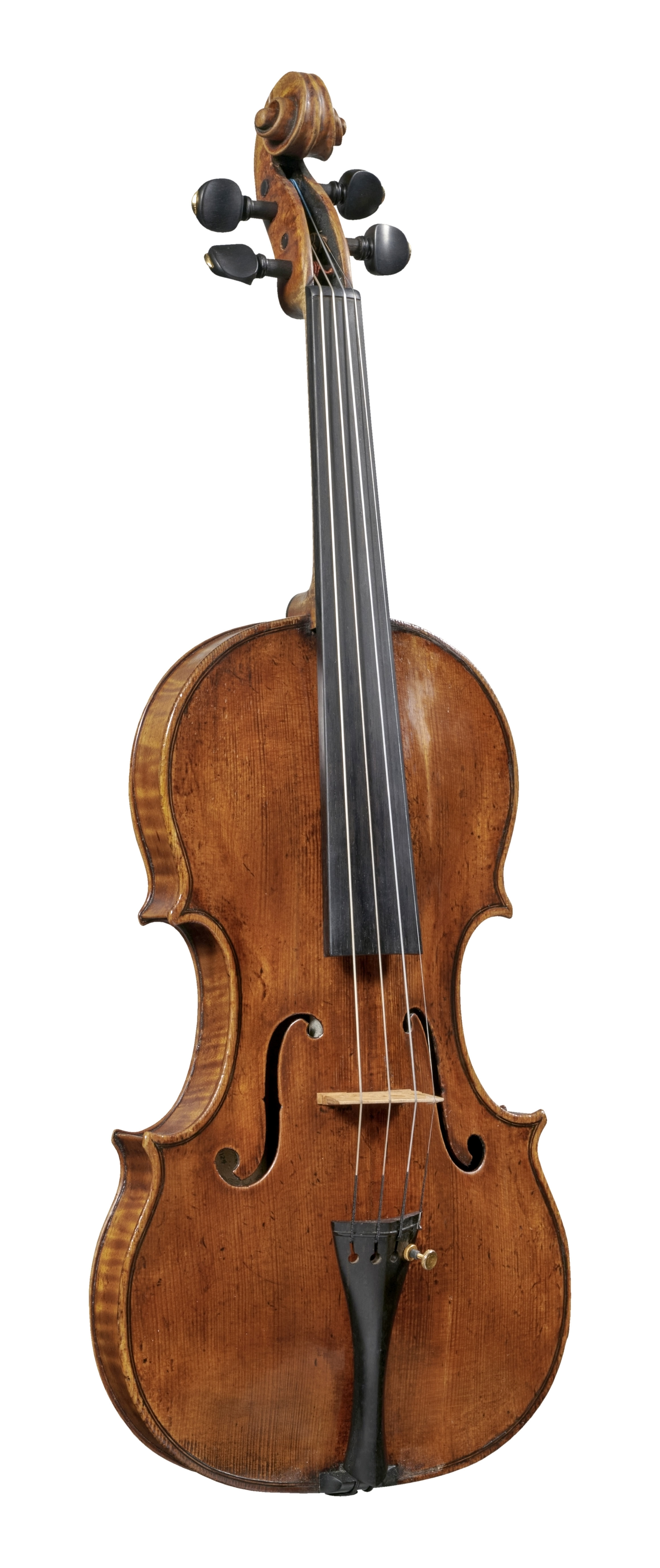
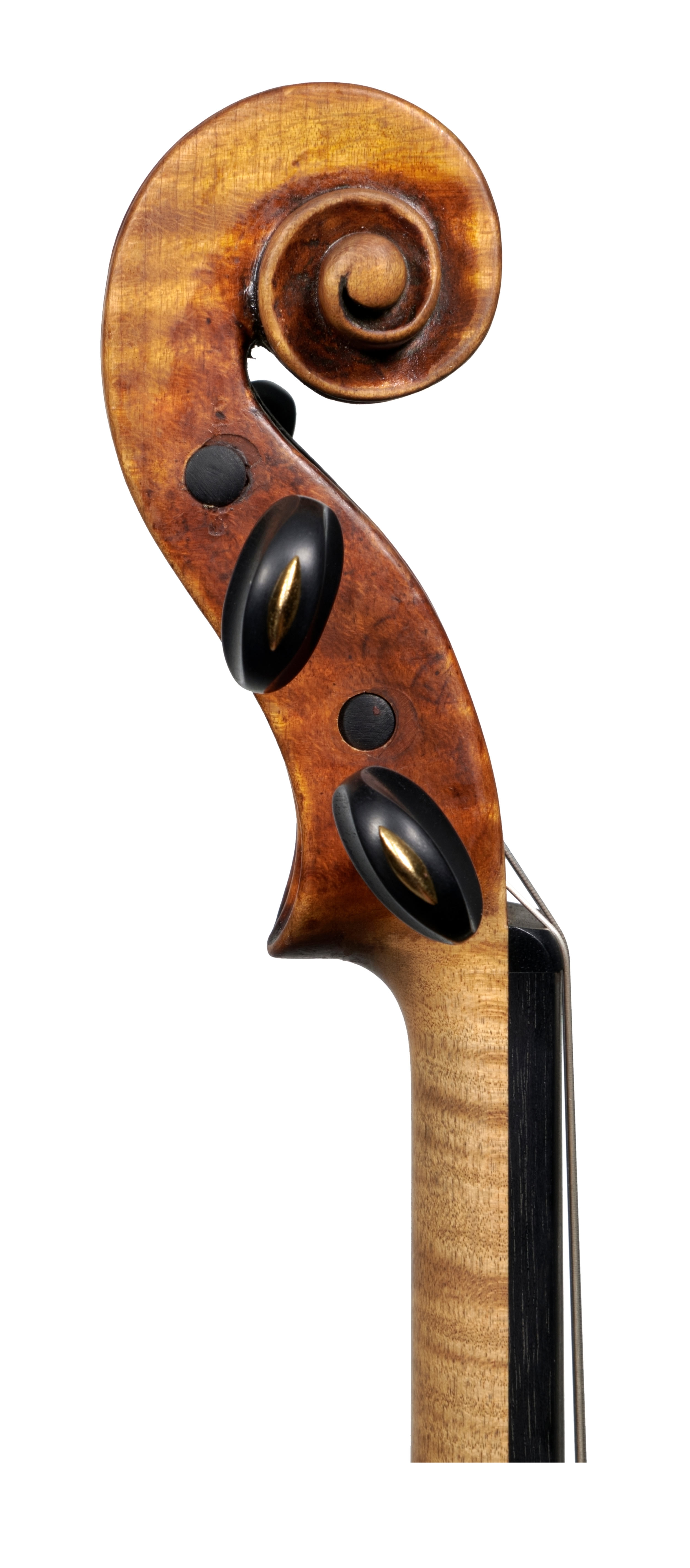
The second is the head, which, although beautifully worked and very classical in appearance, falls short of the precision of an Amati. Under ultra-violet light, it is pretty clear that the varnish is not the same as that of the rest of the instrument, and it does appear to be genuinely old.
This is another common feature of Voller work. To make their violins more convincing, perhaps, they often made use of parts from genuinely old instruments which they salvaged from auctions and the scrap boxes of repairmen. This scroll appears in fact to be the work of Giovanni Tononi, and sits very happily on the instrument, a piece of genuine antiquity which adds a little extra charm to all the other fine, but artfully calculated, qualities of the violin.