
A Collaboration of Masters
John Dilworth examines two cellos from our upcoming October auction to explore the work of four great masters.
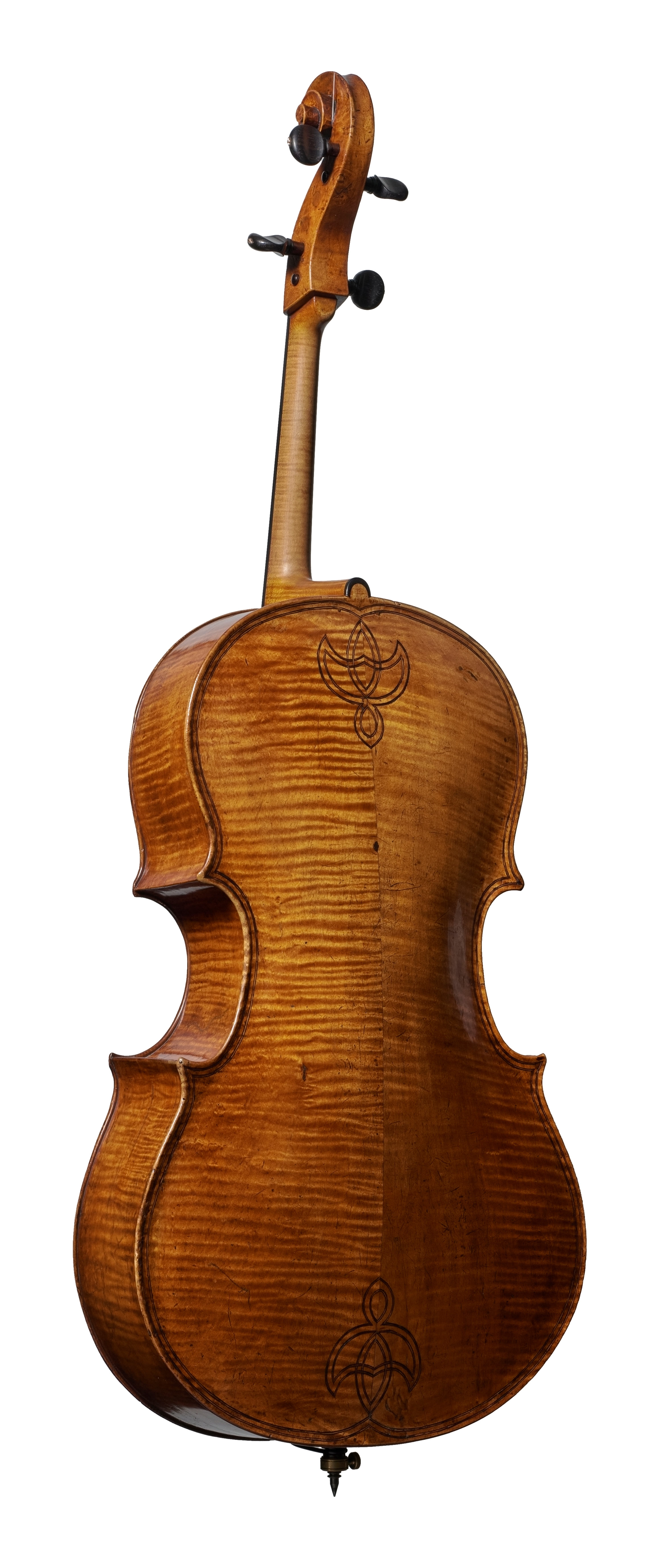
Two very fine and significant cellos provide a rare opportunity to examine some important and intriguing themes in instrument making.
The fact that they are principally the work of two of the most venerated luthiers is just one part of their history. The names of Gasparo da Salò and Domenico Montagnana resonate throughout cello making in particular, Gasparo because of the great age and rarity of his work, and Montagnana because he is considered by many to be the greatest cello maker of all.
Cellos by Gasparo Bertolotti Da Salò (to give him his full name) are rarely found intact, not simply because those that have survived have endured for over four hundred years. Neither the form nor the function of the instrument had been defined during the period of his activity in Brescia, between 1560 and his death in 1609. While Andrea Amati was making very large ‘bass violins’ in Cremona, Gasparo’s ‘cellos’ are of smaller form, and outnumbered by the magnificent double basses he made. But Gasparo would not have recognised the terms ‘cello’ or ‘double bass’; for him they were forms of viol. The heads, where they survive, are not designed for four pegs.
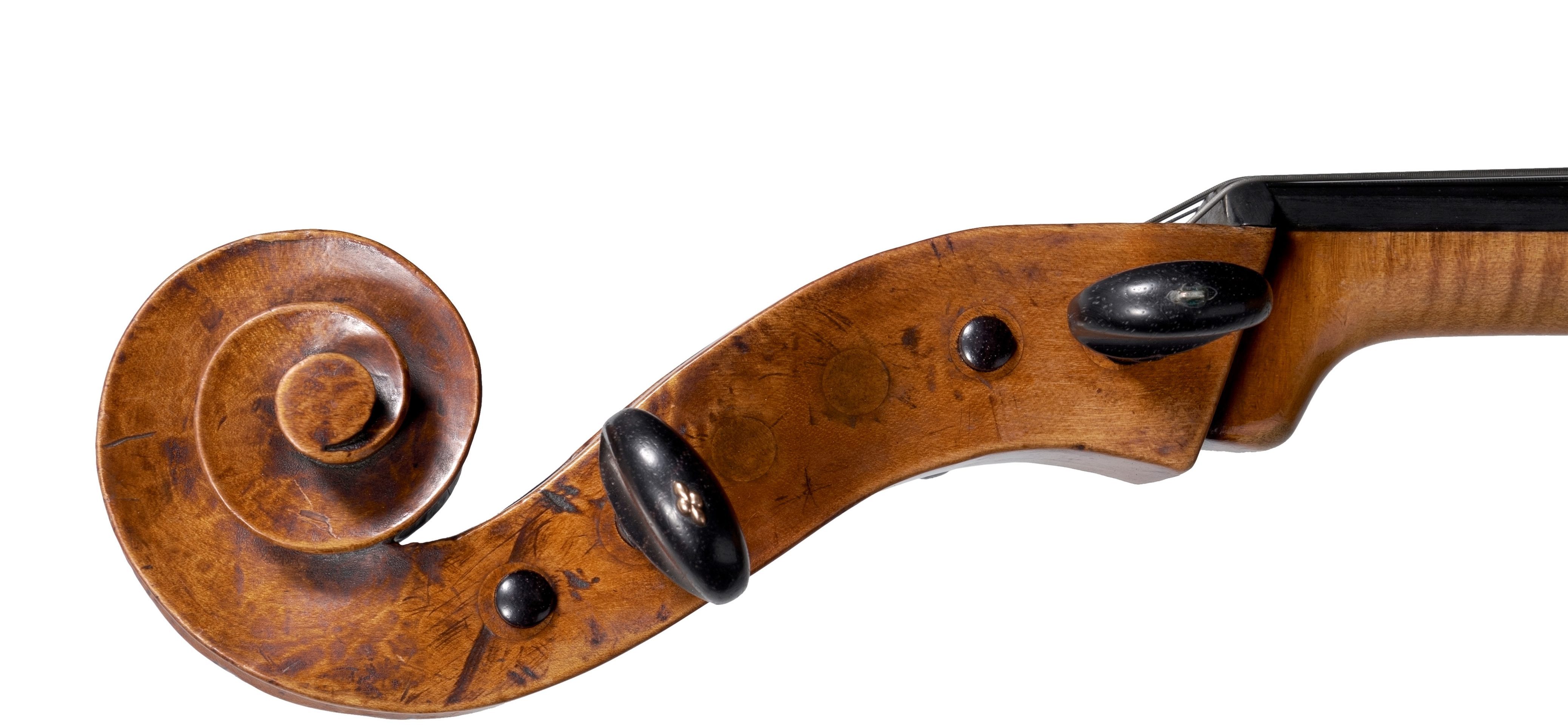
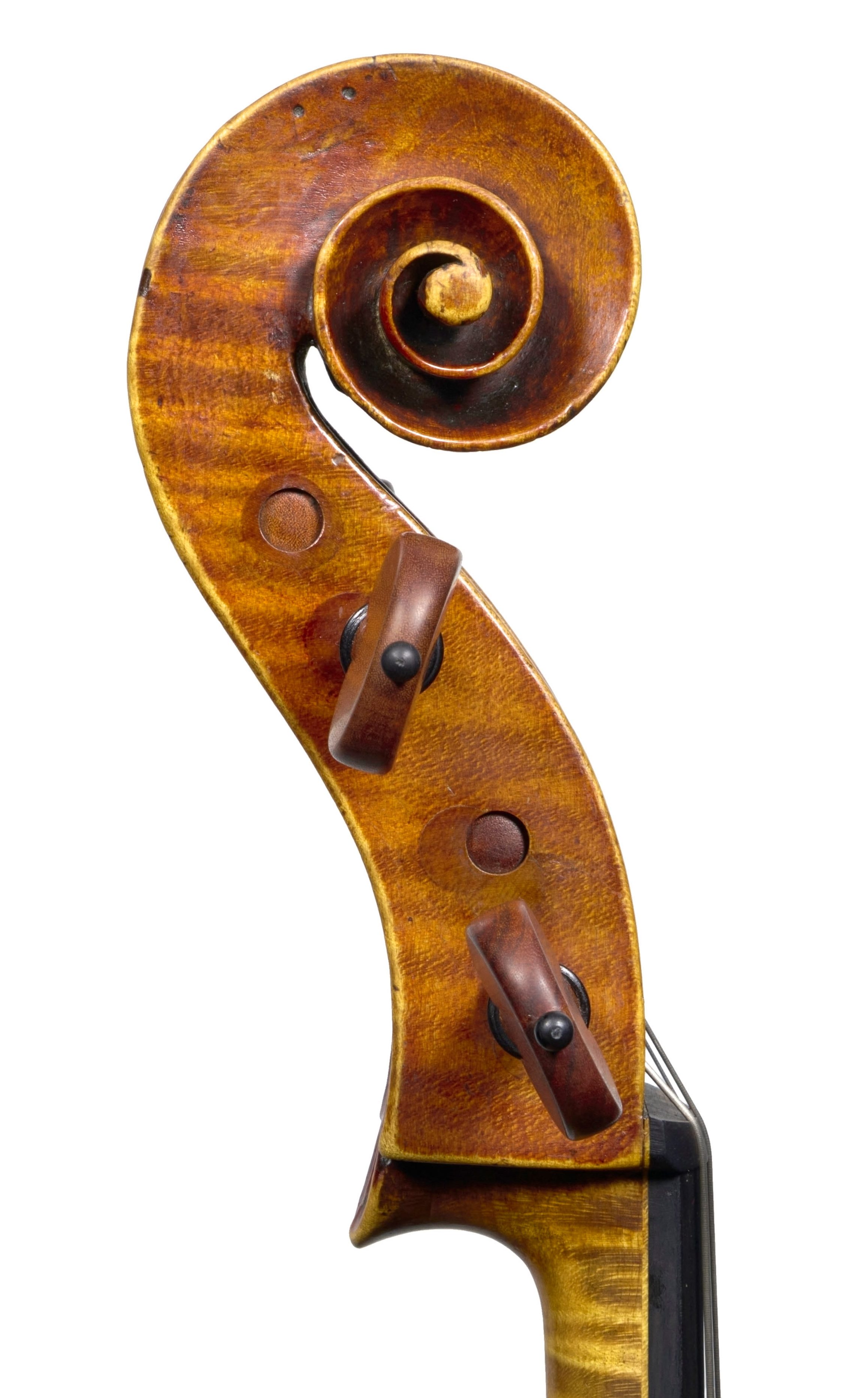
This example has perhaps the only surviving ‘cello’ head made by Gasparo, and it has holes for seven pegs. The design of the square ‘chin’ is that of a viol head, not a classical violin or cello design, while the scroll itself is a wonderfully free piece of sculpture, with a single flute and flared volutes.
"Cellos by Gasparo Da Salò are rarely found intact... those that have survived have endured for over four hundred years."
While the backs of Gasparo’s cellos and basses are carved and arched, not in the usual flat viol form, these instruments fit somewhere in between, with a musical role that is hard to determine. But one observable fact is in his choice of wood. Gasparo often (and quite possibly uniquely) used a very distinctive softwood for the fronts of most of his instruments, a local timber grown apparently on the shores of Lake Garda, which exhibits an exuberant cross-grain figure. But it never seems to appear in his violins. It is as if he treated his violins as quite separate from his other work, with an established form and set of conventions to work to – not just four strings and arched plates, but specifically requiring the use of the straight-grained alpine spruce employed in Cremona. Gasparo used it for his violins, but not in his other work. His ‘cellos’, basses, and other viols, using this figured local timber, were possibly never envisaged as members of the violin ‘family’.
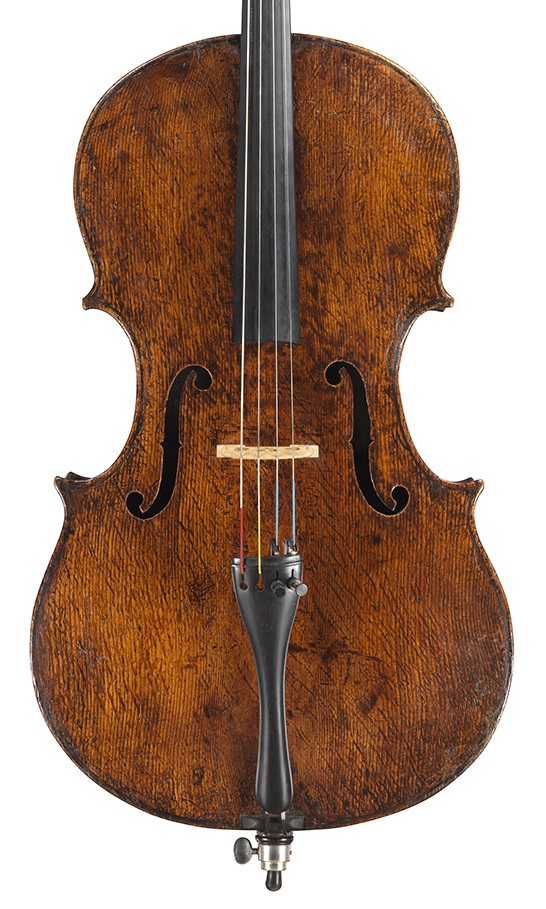
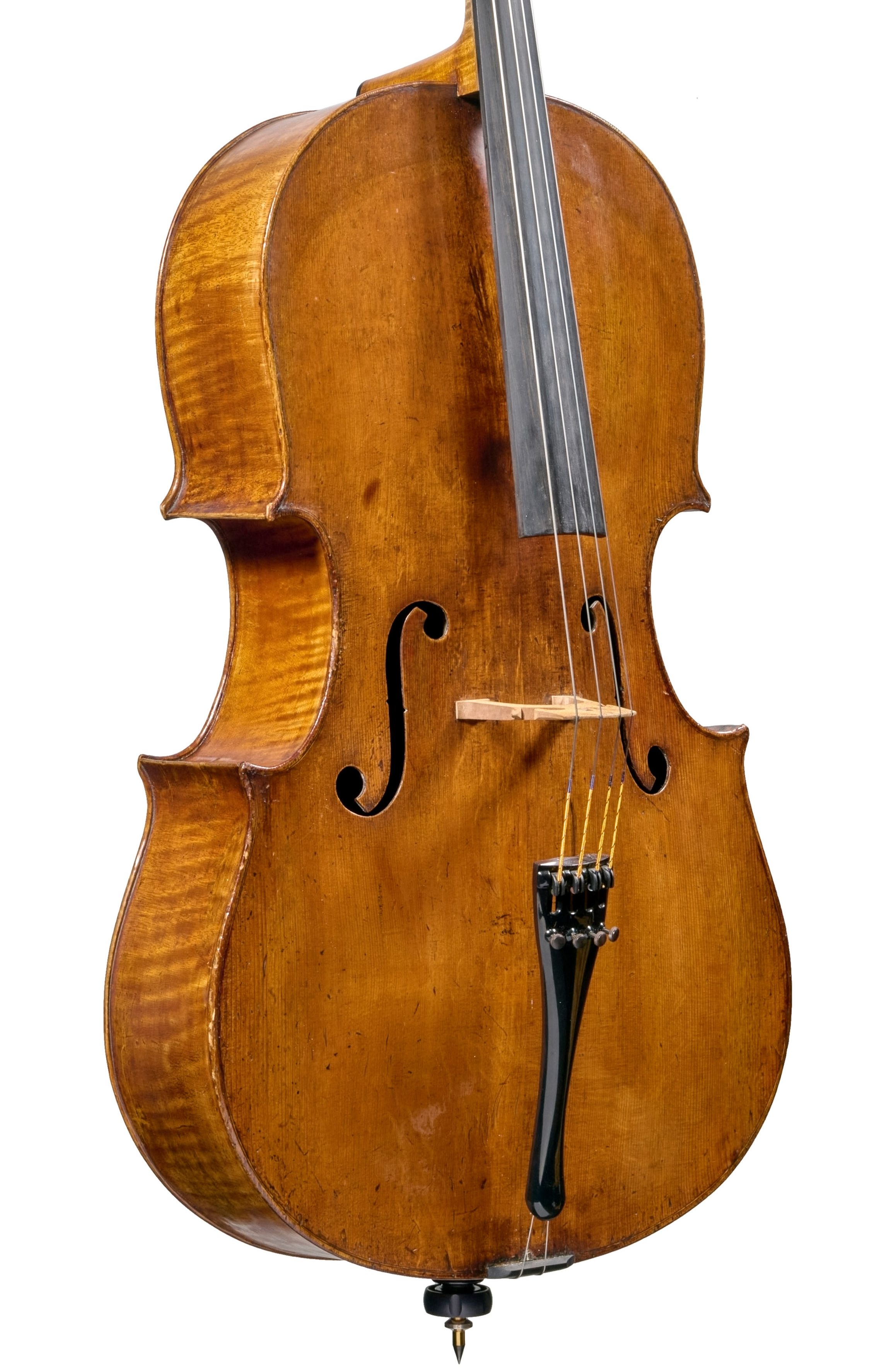
All this theorising seems to fail in the face of the fact that the front of this cello is not made from the expected low-altitude figured wood, and although it is matched perfectly in terms of finish, ground and varnish, it has rather Cremonese-looking soundholes. Looking at the purfling, although the back has Gasparo’s invariable choice of ebony for the black veneers, the front has purfling of stained pear wood. So something is up.
One of the first great impacts of the introduction of dendrochronology into lutherie studies was the realisation that several violins confidently assigned by the greatest and most dependable experts, from the Hills onwards, to Gasparo or his pupil Giovanni Paolo Maggini, were in fact made after their respective deaths in 1609 and 1632. After much discussion and speculation amongst experts the conclusion was reached that these instruments were in fact the work of Giovanni Battista Rogeri. The reasoning is logical. Although Rogeri was trained in Cremona by Nicolo Amati, he moved to Brescia in 1664, where he was effectively the only violin maker, following the 1632 plague which had decimated the city, and the Maggini workshop.
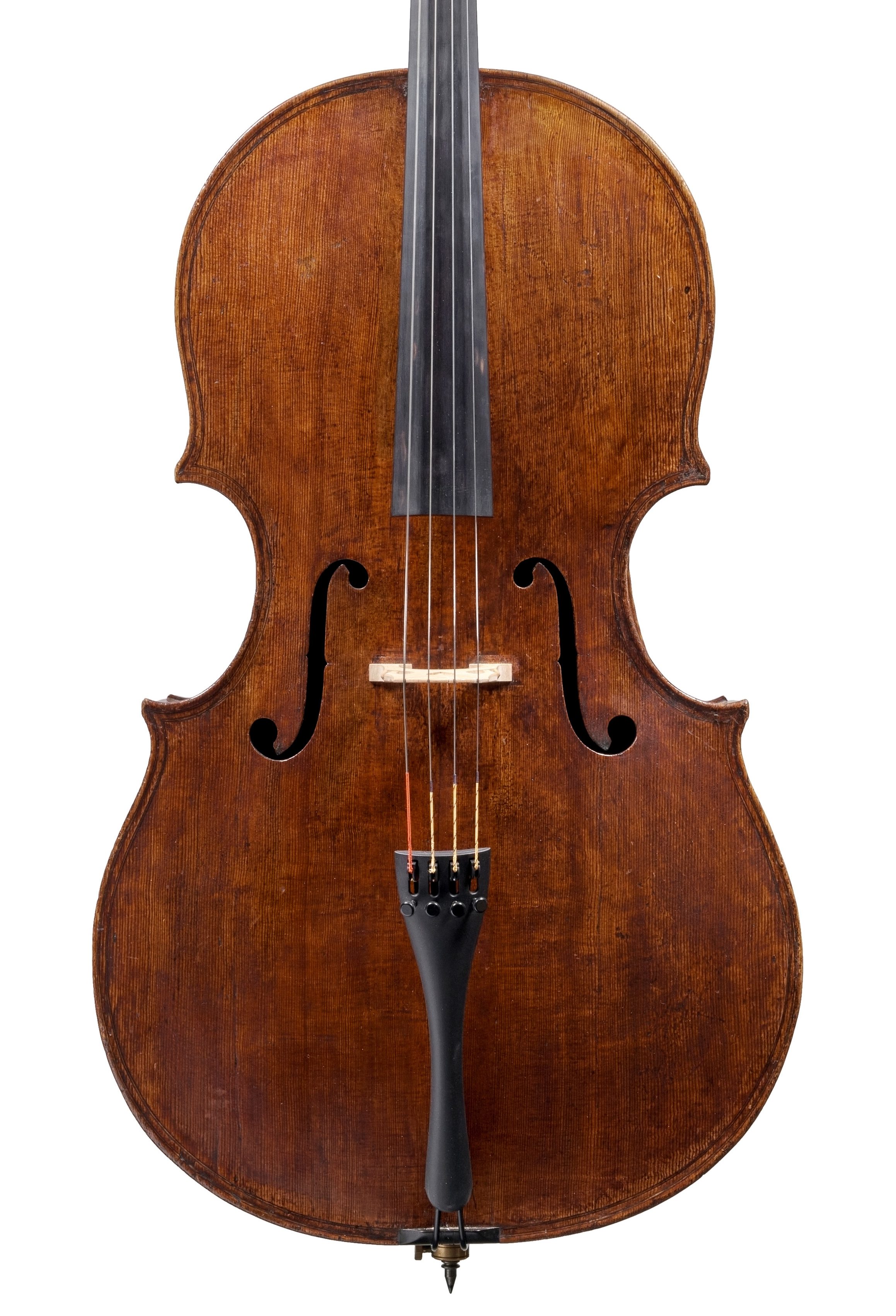
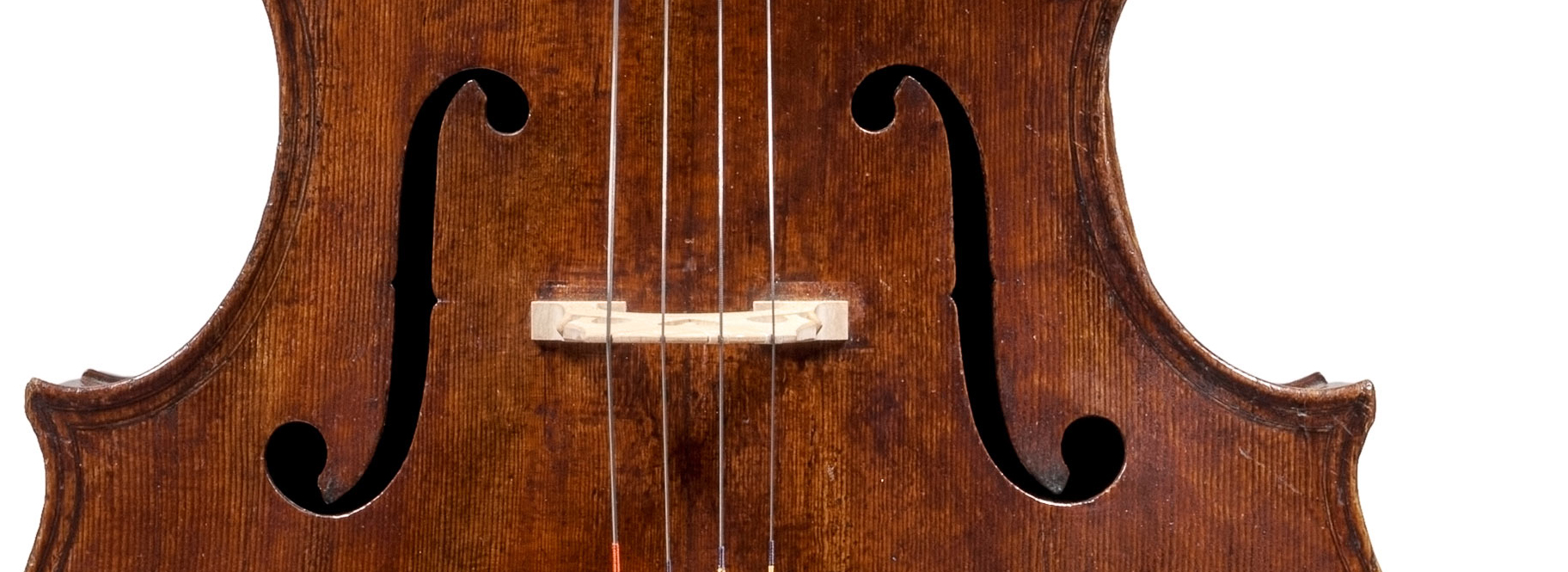
It is intriguing that Rogeri chose to work not only in the Cremonese manner but also to make instruments in the very different style of the old masters of Brescia. We have an impression today that ‘copying’ instruments is a relatively new idea – the old masters were proud of their own hard-earned and distinguishable style. But this cello front is not made in Rogeri’s Brescian or his Cremonese style – the sound holes are recognisably those of his contemporary Francesco Rugeri, and dendrochronological analysis finds matches with Rugeri’s work. The sound holes are clearly in the Cremonese style, although in a very interesting touch, they are bevelled on the internal edges in the manner of Gasparo and Maggini. The purfling is made to carefully match the work of the back, and every aspect of the arch, the finish, and most strikingly the varnish, makes the two parts, front and back, almost indistinguishable.
So what were the circumstances that brought the cello to Rugeri’s workshop, possibly only some thirty or forty years after it was made? Perhaps there had been some catastrophic damage to the front, or perhaps the owner wanted what was then a viol, with multiple strings, modernised. The whole instrument also seems to have been narrowed by half a centimetre or so, to judge by interruptions to the inlaid motifs on the back. But Rugeri’s approach, to make a new front in authentic style, seems quite modern, and in contrast to the circumstances that have brought the other cello of this pair, the Domenico Montagnana cello to its present, analogous condition.
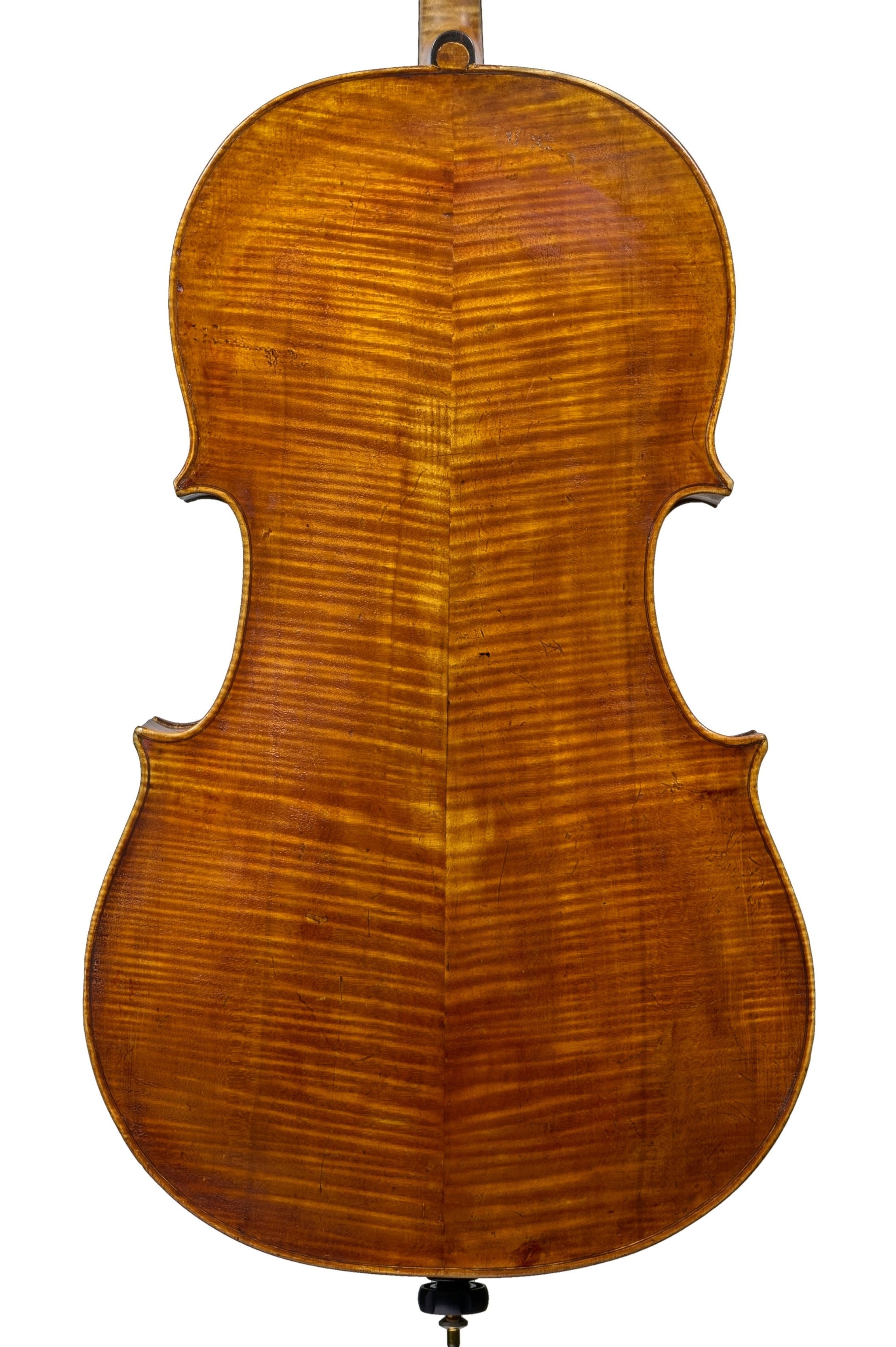
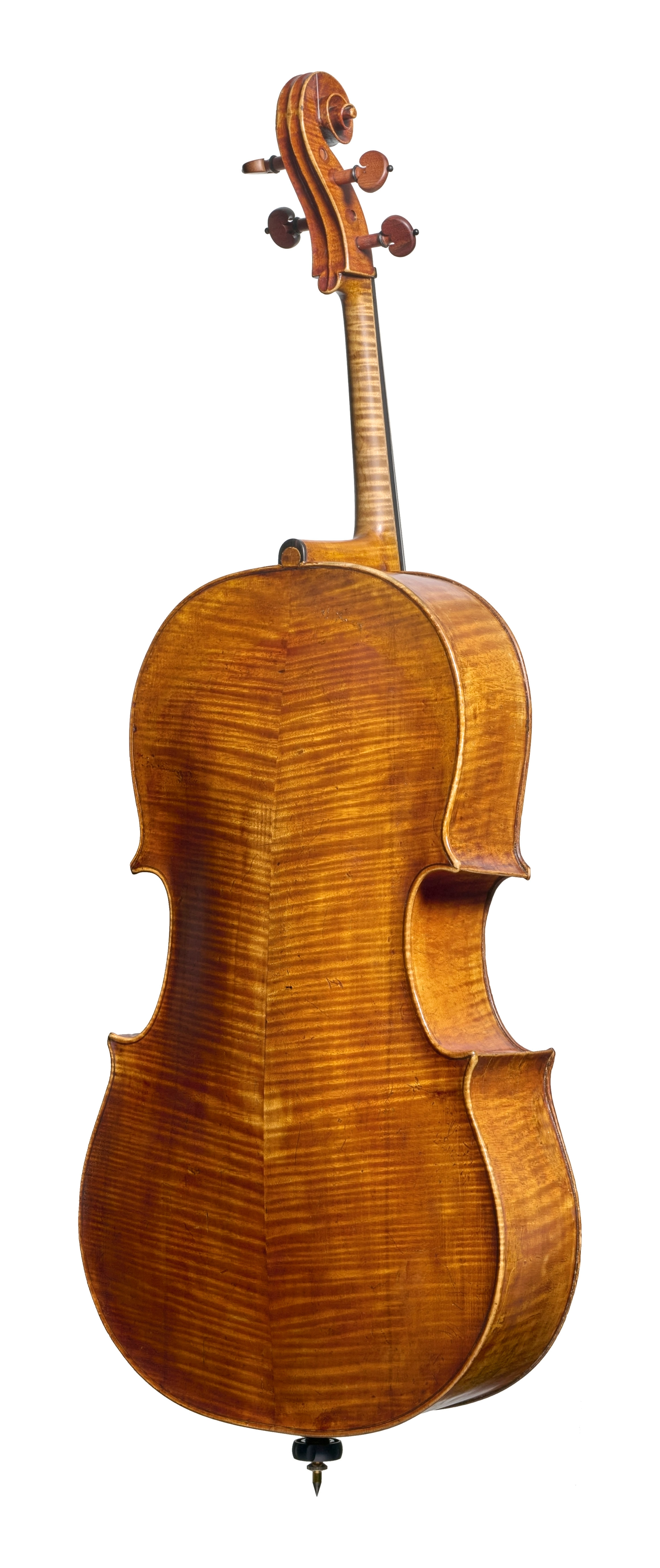
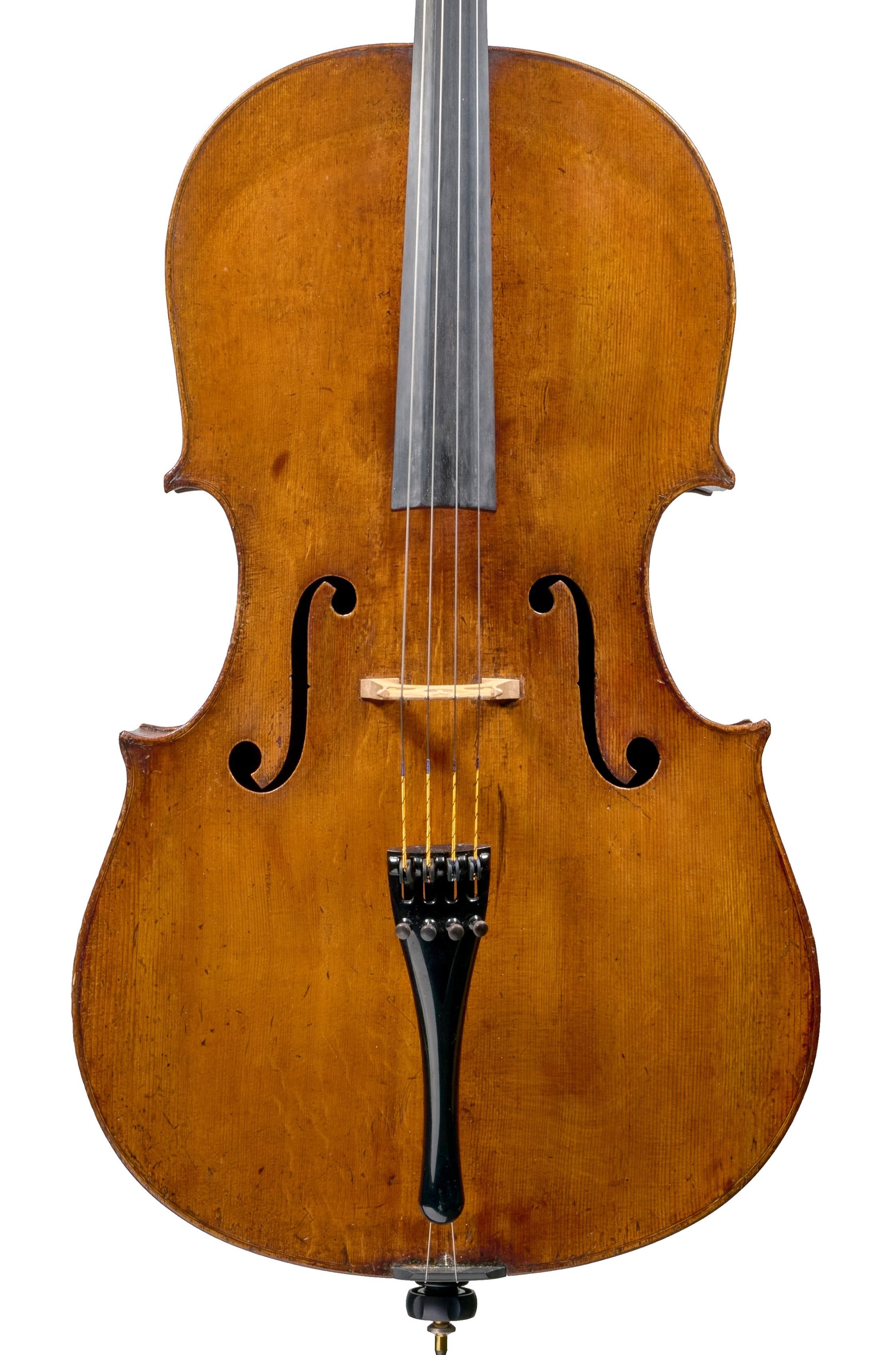
The Montagnana, while a superb example of the maker’s work in the supple vaulting and beautifully textured golden red varnish of the back, also has a front – and also a scroll – by another maker, similarly distinguished and venerated. The cello itself has a colourful history. It was cut down at some point and then re-enlarged in the workshop of J.B. Vuillaume around the second half of the 19th century, at which point its original label had the clear date of 1736, which has since been overwritten. It had also lost its original head and front, which are clearly the work of Giovanni Battista Guadagnini, from his early period in Piacenza, and made to precisely fit the Montagnana’s typically asymmetrical rib outline.
"A superb example of the maker’s work in the supple vaulting and beautifully textured golden red varnish of the back"
In contrast to Rugeri’s work on the Gasparo, Guadagnini seems to have made no concessions at all to the original style and workmanship of Montagnana, and clearly did not use a similar varnish. What is striking is that closeness of dates. The repair work (if such it was) was done before 1749, when Guadagnini moved to Milan, and made notable changes to his style. It means that the Montagnana cello was no more than thirteen years old, and Domenico himself was still active when Guadagnini made the new parts for it.
If we assume that again, the cello had been the victim of an accident which damaged both the neck and front, it was not considered worth returning it to the maker for appropriate replacement parts to be made. And perhaps Guadagnini felt that he could simply make a front that was better than the original. We gather from his dealings with Count Cozio di Salabue, recorded in Cozio’s correspondences, that he was strong-willed and somewhat stubborn.
Our ideas of repair and restoration have certainly developed since the 18th century. In those times, it must have felt as if the craft of luthierie was alive and thriving in a sustained tradition, and makers were not inhibited in completely replacing a piece that, by modern standards, had suffered only minor damage. Today we go to enormous lengths to conserve every fragment of original material, such is the value of these great instruments, and in deference to the ‘lost arts’ of the past – methods of seasoning, acoustics, wood treatments and varnishing that cannot be recreated. Rugeri seems to have had a bottle of Gasparo’s varnish to hand when he restored the cello. Guadagnini did not have Montagnana’s varnish, but maybe felt that he had a superior recipe that did not wrinkle and craze in the way that, somewhat ironically, we so admire today.
These two fascinating cellos give us insights into the work of four great masters. A rare occurrence which raises many questions about the various traditions of violin making and maybe even gives us a glimpse of how these craftsmen viewed themselves and their colleagues and rivals.