
London’s Most Mysterious Violin Maker
John Dilworth explores the mystery of one of England’s most notable violin makers
Daniel Parker is one of the finest yet most inscrutable names in English violin making. Unfortunately for us he had a common, unremarkable name, unlike Barak Norman, or Edward Pamphilon, which has defied genealogical research into his background. There are so many Daniel Parkers in the parish records of London, let alone the rest of the country, that it is impossible to say for sure when or where he was born, how he became a violin maker or where in London he may have worked.
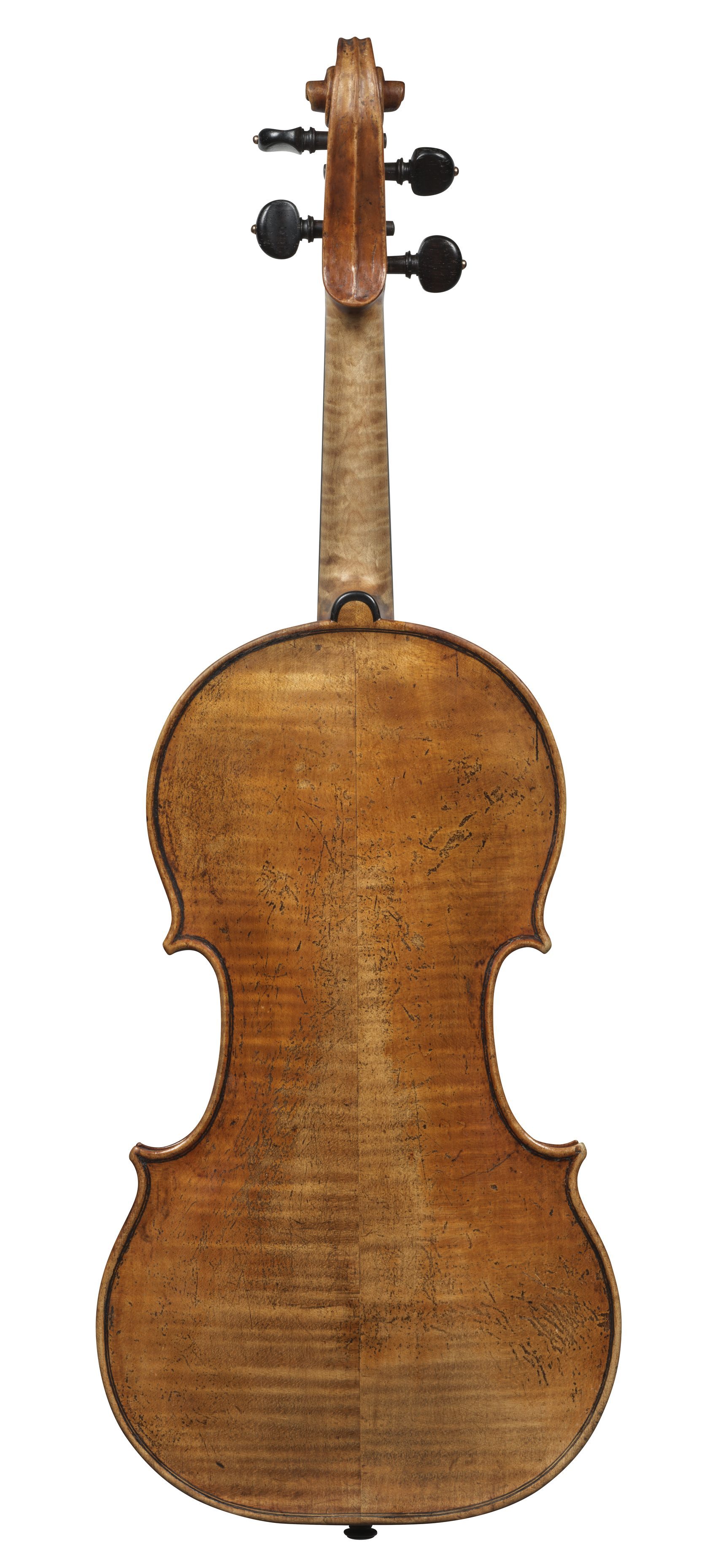
All we do know comes from the few authentically labelled violins, like this characteristic example from 1716, and a careful study of his style and technique. Through this we can surmise that he was a pupil of Barak Norman, about whom we do know a considerable amount as he was celebrated as one of the great viol makers in the respected English tradition. Much was written about him, and his name is well-known. This is not the case for Parker, and the rarity of his labels or any discourse about him in contemporary accounts suggest that he spent most of his life as an employee of the various music shops in London, like those of Norman and John Hare.
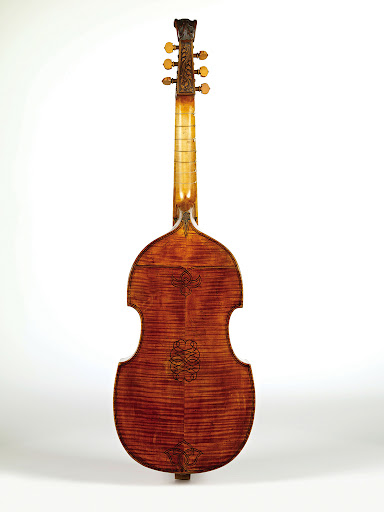
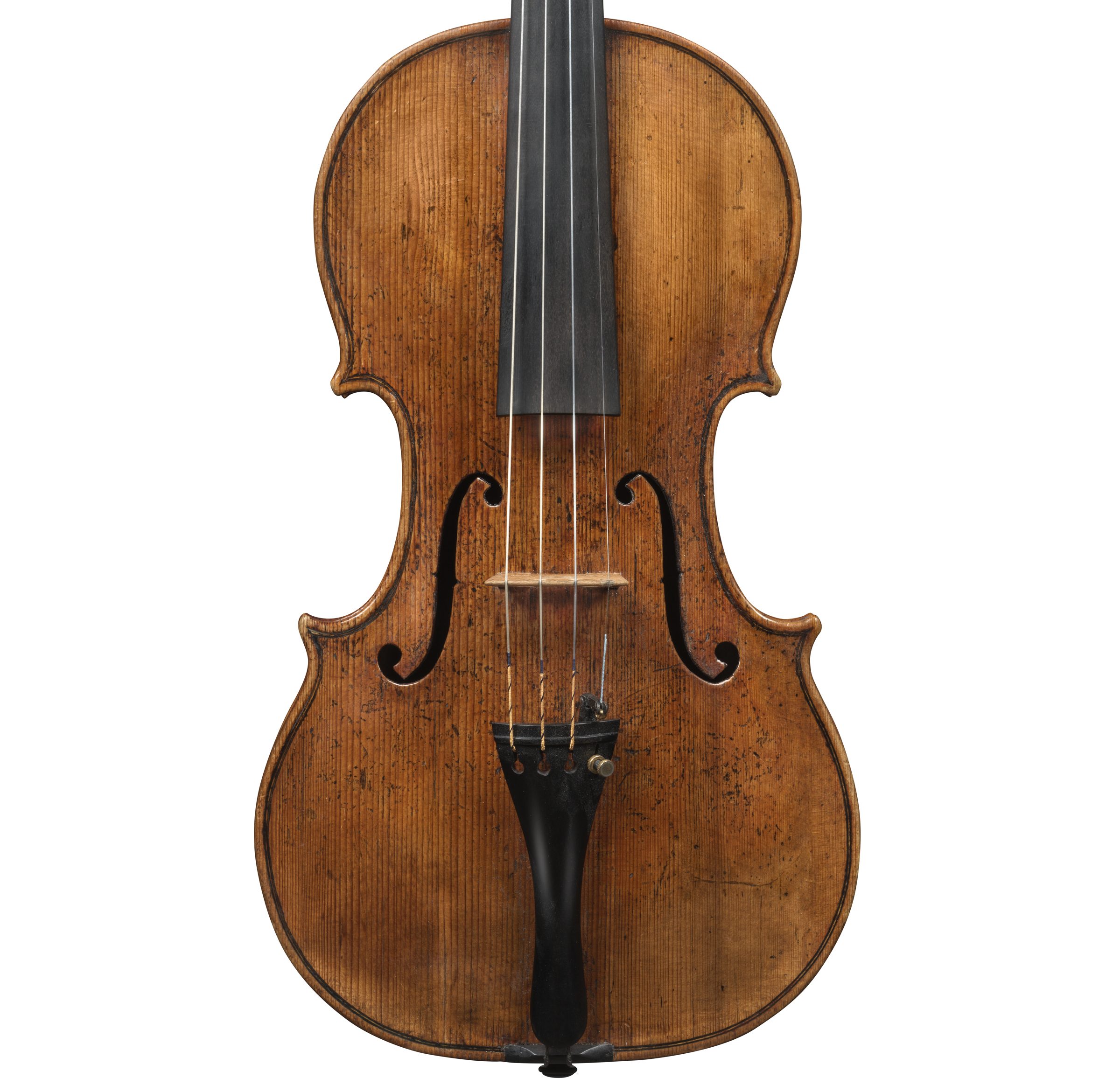
Yet Parker’s work and style is unique, and is clearly evident in instruments bearing the labels of both Norman and Hare. Sometimes it is a little eccentric, in what can be characterised as the English school of the period, especially in the rare violas attributed to him. But what makes him truly outstanding is his Stradivari-modelled violins like this one, possibly the first of their kind anywhere in Europe. The great thing about Parker’s work is its character- there is a muscular ruggedness to this instrument that does not obscure the careful attention paid to the full and beautifully shaped arching and the disciplined model, clearly taken from a Stradivari of the period 1685-1690. The varnish too is rich and carefully applied, and has the texture and depth of a fine old Italian.

There are details in the work that reveal how much was taken from his close observation of Stradivari instruments, and how much came from his own training in London. The model is clearly inspired by a 1680s Stradivari, with its characteristic slightly downward sloping upper corners. The scroll is also quite accurately rendered, and does not have a blackened chamfer, which would not have been present in a Stradivari of this period. What is his own is the distinctive flattened, tapering edge-shape, and the fullness of the arch. We can guess that while this violin is a close copy, it is an external one – there is no evidence that he was acquainted with the great Cremonese master’s technique: there are no pins in the front or back fixing the plates to the end blocks, and the linings are set without a mortice into the corner blocks. Another significant point is that the ribs are joined with a simple joint, the seam visible at the ends of the corners. The Cremonese method was to carefully lap the joint so that no seam was visible.
The story of how Daniel Parker got his hands on a Stradivari violin in the early eighteenth century is a fascinating and important one, first suggested by the violin historian Duane Rosengard. Living in London between 1702 and 1705 was a Cremonese violinist, Gaspare Visconti, born to a noble family there in 1683. He was a very well-connected man. A 1684 bass viol by Stradivari known as the Visconti da Madrona was probably made for his family. Gaspare was a pupil of Arcangelo Corelli and may have been sent to London as his proxy – as a devout Catholic, Corelli was reluctant to travel to London himself despite his great popularity there.
We also know that Visconti knew Stradivari personally in Cremona; Stradivari’s early biographer and contemporary Don Desiderio Arisi noted that Visconti advised Stradivari about the tonal development of his instruments. While in London, Visconti met and married Christina Steffkins, a member of a well-known musical family who were employed at the English Royal court as violists. She accompanied Gaspare back to Cremona in 1705, where she commissioned a cello from Stradivari himself in 1707; the surviving templates are inscribed with her name.

The rest is a little speculative, but it would seem very likely that Visconti’s own instrument was a Stradivari, made only a few years before he came to London. Christina Steffkins would have been well-acquainted with the viol workshop of Barak Norman, where the young Daniel Parker was occupied. Introductions were made. The rest, as they say, is history.
For more information about the 1716 Daniel Parker violin, please visit our Private Sales page
Recent Posts
Categories
- Feature Type
- Instrument Type
-
Maker
- Albani I, Matthias (2)
- Amati, Andrea (8)
- Amati, Antonio & Girolamo (6)
- Amati, Girolamo II (6)
- Amati, Nicolò (6)
- Balestrieri, Tommaso (3)
- Banks, Benjamin (1)
- Bazin, Charles Nicolas (1)
- Bergonzi Family (1)
- Bergonzi, Carlo (2)
- Bergonzi, Michele Angelo (2)
- Bernardel, Auguste Sébastien Philippe (2)
- Bisiach, Leandro (2)
- Bultitude, Arthur Richard (1)
- Bussetto, Giovanni Maria del (1)
- Camilli, Camillo (2)
- Cappa, Gioffredo (2)
- Carcassi, Lorenzo & Tomaso (1)
- Ceruti, Giovanni Battista (3)
- Chanot, George Adolph (1)
- Cuypers, Johannes Theodorus (1)
- Dalla Costa, Pietro Antonio (1)
- Deconet, Michele (1)
- Fendt, Bernard Simon II (1)
- Fendt, Bernhard Simon I (1)
- Gabrielli, Giovanni Battista (1)
- Gagliano, Alessandro (2)
- Gagliano, Ferdinando (1)
- Genova, Giovanni Battista (1)
- Gisalberti, Andrea (1)
- Goffriller, Francesco (1)
- Goffriller, Matteo (1)
- Grancino, Giovanni (4)
- Grancino, Giovanni Battista II (1)
- Guadagnini, Gaetano II (1)
- Guadagnini, Giovanni Battista (7)
- Guarneri 'filius Andreæ', Giuseppe (3)
- Guarneri del Gesù, Giuseppe (5)
- Guarneri of Mantua, Pietro Giovanni (2)
- Guarneri of Venice, Pietro (3)
- Guarneri, Andrea (3)
- Götz, Conrad (1)
- Hill & Sons, W.E. (1)
- Kennedy, Thomas (1)
- Knopf, Carl Heinrich (1)
- Landolfi, Carlo Ferdinando (1)
- Lott, John Frederick (1)
- Lupot, Nicolas (2)
- Mantegazza, Pietro Giovanni (2)
- Mariani, Antonio (1)
- Montagnana, Domenico (2)
- Panormo, Vincenzo Trusiano (1)
- Parker, Daniel (1)
- Peccatte, Dominique (1)
- Platner, Michele (1)
- Pressenda, Giovanni Francesco (1)
- Rayman, Jacob (1)
- Retford, William Charles (1)
- Rivolta, Giacomo (1)
- Rocca, Giuseppe Antonio (2)
- Rota, Giovanni (1)
- Rugeri, Francesco (3)
- Sartory, Eugène (1)
- Scarampella, Stefano (2)
- Schwartz, George Frédéric (1)
- Serafin, Santo (1)
- Sgarabotto, Gaetano (1)
- Sgarabotto, Pietro (1)
- Simon, Pierre (1)
- Stainer, Jacob (3)
- Storioni, Lorenzo (3)
- Stradivari, Antonio (14)
- Stradivari, Francesco (1)
- Stradivari, Omobono (1)
- Tadioli, Maurizio (1)
- Taylor, Michael (1)
- Tecchler, David (2)
- Testore, Carlo Giuseppe (1)
- Tourte, François Xavier (4)
- Tubbs, James (1)
- Voller Brothers (1)
- Vuillaume, Jean-Baptiste (10)
- Watson, William (1)
- da Salò Bertolotti, Gasparo (2)
- Author
- Charity
-
In the Press
- Antiques Trade Gazette (3)
- Archi-magazine.it (1)
- Art Daily (2)
- CNN Style (1)
- Classic FM (2)
- ITV (1)
- Ingles & Hayday (4)
- Liberation (1)
- Life Style Journal (1)
- London Evening Standard (1)
- Paul Fraser Collectibles (1)
- Rhinegold Publishing (1)
- Sotheby's (1)
- Strings Magazine (2)
- Tarisio (2)
- The Fine Art Post (1)
- The Strad (7)
- The Times (1)